
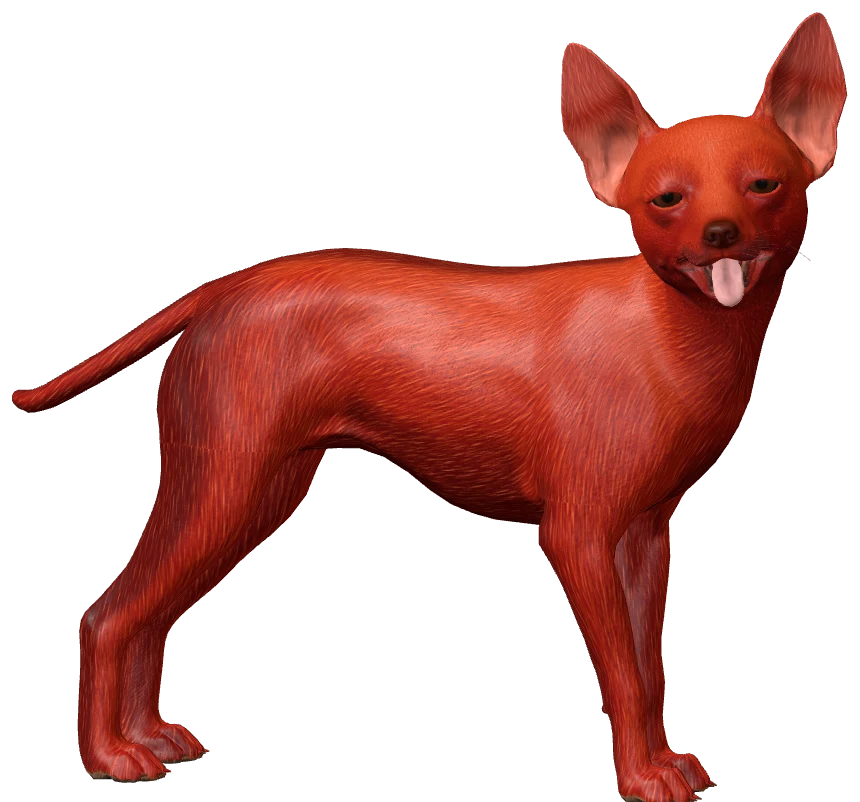
The breed standard asks for a small, elegant, lively dog that is long legged, with fine bone and lean muscles, and squarely built.
At a glance
A very small, square, long-legged dog with fine bones, lean muscles and large ears carried erect. It comes in a smooth or a long coat; the smooth coat is short, close-lying and glossy. Russian Toys stand 20 to 28 cm at the shoulder, weigh up to 3 kg and usually live 12 to 14 years. They are active, cheerful and devoted to their family. Sillmates makes the Toy Terrier as a desktop pet companion for Mac and Windows, in Red and Black and Tan coats.
History and origin
English Toy Terriers reached Russia in the 18th century, where they became popular with an aristocracy drawn to the English way of life; one early specimen, preserved in a museum in St Petersburg, belonged to Emperor Peter the Great. By the early 20th century these dogs were common in Russia and were simply called Russian Toy Terriers. The revolution of 1917 and the wars that followed nearly wiped them out, because toy dogs were closely linked to the aristocracy, but dedicated breeders kept small kennels going. From the mid-1950s the contemporary Russian Toy was stabilised and developed, and it came to differ markedly from the classic toy terrier. In 1958 a long-coated puppy named Chiki was born, starting the Moscow Long Haired Toy Terrier. A 1988 standard brought both coats together as one breed, and in 2006 the FCI added it to its roster under the new name Russian Toy. The first Russian Toys reached the UK in 2008.
Temperament and personality
The American Kennel Club describes the Russian Toy as active and cheerful, with keen intelligence and a desire to please. It loves to snuggle and be close to its people, though it can be slightly aloof with strangers; it is neither cowardly nor aggressive. The breed was originally bred as a watchdog and ratter. The Royal Kennel Club calls it very loyal to its family and eager to please, which makes it suitable for training in agility and obedience.
Size and build
The breed standard asks for a small, elegant, lively dog that is long legged, with fine bone and lean muscles, and squarely built. Height at the withers is 20 to 28 cm (8 to 11 inches) and weight up to 3 kg (6.5 pounds), figures the American Kennel Club matches at 8 to 11 inches and up to 6.5 pounds. The head is small compared to the body, the neck long, lean and slightly arched, and the ears large, thin, set high and erect.
Coat and colours
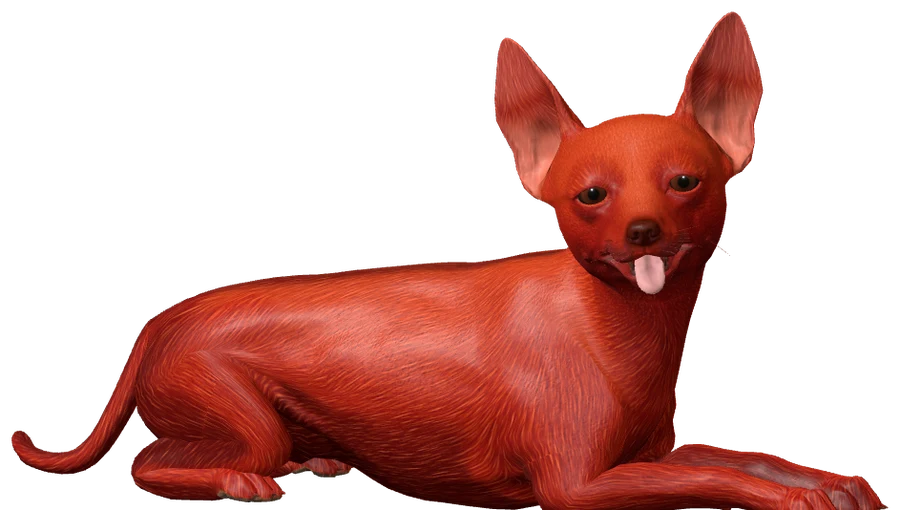
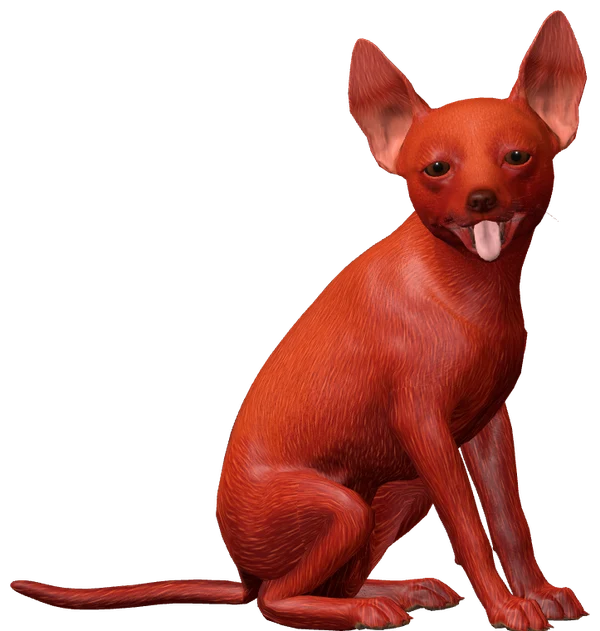
There are two coat types. The smooth-haired dog is single coated, with a short, close-lying, glossy coat. The long-haired dog has a moderately long coat of 3 to 5 cm, straight or slightly wavy, with ears fringed with thick, long hair. The Royal Kennel Club standard colours are black and tan, brown and tan, blue and tan, lilac and tan, red of any shade (with or without a darker overlay), fawn and cream, with richer shades preferred and white markings highly undesirable. Both of our coats, red and black and tan, are standard Russian Toy colours.
Exercise and play
The Royal Kennel Club puts the exercise need at up to an hour a day. The Russian Toy is small, lively and active, and suits people with limited space who still want a dog that needs and enjoys some exercise. Its eagerness to please makes it a good candidate for agility and obedience training, which give it a job for its quick mind as well as its legs.
Grooming and care
Smooth-coated Russian Toys need less grooming than the long-haired variety, and both coats can be bathed once a month. The Royal Kennel Club lists grooming for the breed as every day, and notes that the coat sheds. Puppies may need veterinary help during the teething phase, so keep an eye on their teeth as the adult teeth come in.
Health and lifespan
The American Kennel Club gives a life expectancy of 12 to 14 years and The Royal Kennel Club over 12 years. The UK breed club lists patellar luxation, where the kneecap shifts out of place, as one of the most common skeletal problems in small breeds, and asks breeders to have dogs' knees graded before breeding. It also describes progressive retinal atrophy (PRA), an eye disease, and Legg-Calve-Perthes disease, a disorder of the hip joint. The Kennel Club now recommends patella and eye testing for the breed. Buy from a breeder who tests, and see your vet if your dog limps, will not put weight on a leg, or seems to have trouble seeing.
Living with one
This is a dog for close companionship: it loves to be near its people and is very loyal to its family. The Royal Kennel Club rates it suitable for a flat or apartment, for town or country, with a small to medium garden, and as a good choice for people with limited space. As with any dog, always supervise it with children and vulnerable adults, and give it time to warm up to visitors, since it can be slightly aloof with strangers.
Fun facts
One of the earliest English-style terriers in Russia, a short-haired terrier named Lizetta, belonged to Peter the Great and is still on display in the Museum of Zoology in St Petersburg. The whole long-haired variety traces back to a single puppy named Chiki, born in 1958. And the breed did not take its current name, Russian Toy, until 2006.
About the Toy Terrier
At a glance.
- Origin
- Russia (from English Toy Terriers)
- Group
- Toy (Royal Kennel Club and AKC)
- Height
- 20–28 cm
- Weight
- up to 3 kg
- Lifespan
- 12–14 years
- Coat
- Smooth (short, close-lying, glossy) or long (3-5 cm, fringed ears)
- Colours
- Black and tan, Brown and tan, Blue and tan, Lilac and tan, Red of any shade, Fawn, Cream
11
Questions about
the Toy Terrier.
Is the Toy Terrier the same as the Russian Toy?
Yes. The breed was known as the Russian Toy Terrier until 2006, when the FCI renamed it the Russian Toy. Our Toy Terrier is the smooth-coated Russian Toy.
How big does a Russian Toy get?
Very small: 20 to 28 cm at the shoulder and up to 3 kg, according to the breed standard and the American Kennel Club.
What colours do Russian Toys come in?
Black and tan, brown and tan, blue and tan, lilac and tan, red of any shade, fawn and cream. White markings are highly undesirable.
How long do Russian Toys live?
The American Kennel Club gives 12 to 14 years, and The Royal Kennel Club over 12 years.
Is a Russian Toy good for a flat?
Yes. The Royal Kennel Club rates it suitable for a flat or apartment and for people with limited space, with up to an hour of exercise a day.
12 · Sources
russiantoyclubofamerica.org/breed-historyrussiantoyclubuk.co.uk/historyroyalkennelclub.com/search/breeds-a-to-z/breeds/toy/russian-toyakc.org/dog-breeds/russian-toyroyalkennelclub.com/breed-standards/toy/russian-toyrussiantoyclubuk.co.uk/healthpdsa.org.uk/pet-help-and-advice/looking-after-your-pet/puppies-dogs/small-dogs/jack-russell-terrierroyalkennelclub.com/search/breeds-a-to-z/breeds/toy/english-toy-terrier-black-tan