
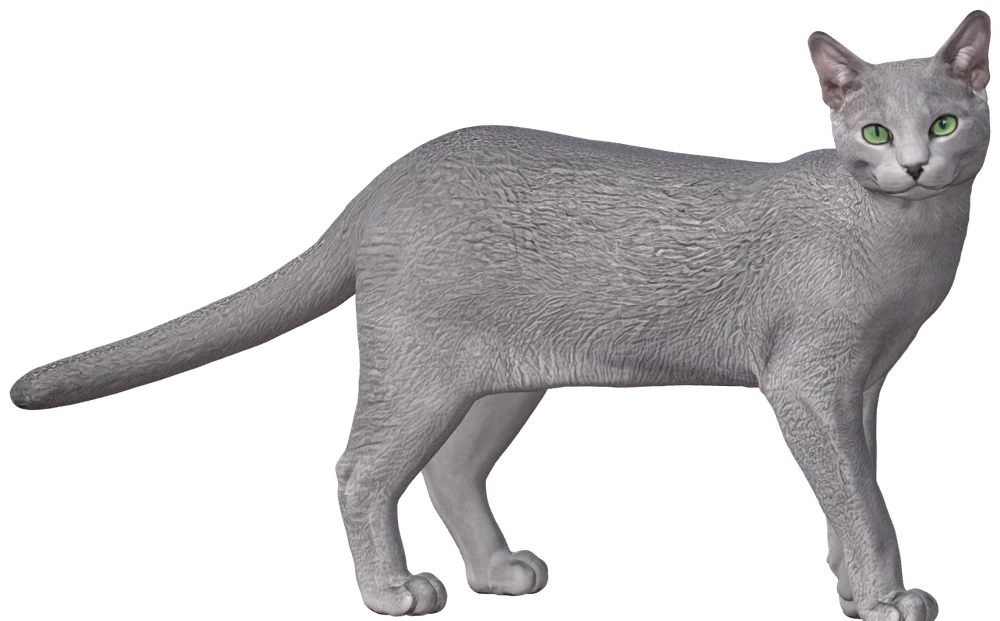
The Cat Fanciers' Association says the breed is believed to have originated in the Archangel Isles in northern Russia, though there is very little written history before the late 1800s.
At a glance
A medium-sized, fine-boned cat with a plush, silver-tipped blue-grey double coat and green eyes. Russian Blues usually weigh about 3 to 5.5 kg, and lifespan estimates run from around 12 up to 20 years. They are intelligent, quiet and affectionate, and they like a calm routine. Sillmates makes the Russian Blue as a desktop pet companion for Mac and Windows, in a Blue coat.
History and origin
The Cat Fanciers' Association says the breed is believed to have originated in the Archangel Isles in northern Russia, though there is very little written history before the late 1800s. VCA mentions other stories too: that it descends from the Royal Cat of the Russian Czars, or that it travelled on the shoulders of Cossacks. Sailors are thought to have brought the cats to England, where they took part in the early cat shows under the name Archangel Cats, competing with all the other solid blue cats; VCA says the breed was among the first shown at the Crystal Palace in 1875. From the early 20th century until the Second World War, Scandinavian breeders took the lead in developing it. Later, American breeders imported cats from Europe and combined the English and Scandinavian bloodlines to produce the Russian Blue of today. The CFA accepted the breed for registration in 1949.
Temperament and personality
The CFA ranks the Russian Blue among the cleverest of all breeds, with real mechanical aptitude: closed cabinets, drawers and even jars are a tempting challenge, so do not be surprised to find one opened. VCA describes them as gentle and affectionate, not pushy, and happily devoted to their favourite people. They are very sensitive to their owners' moods and will clown around to cheer you up or offer gentle purrs and head butts to a crying child. PetMD notes they are relatively quiet, independent and fond of routine, and that they don't like change. Shyness with strangers and houseguests is common and should not be mistaken for aloofness.
Size and build
The Russian Blue is lean, fine-boned and medium-sized. The CFA says males rarely exceed 10 pounds and females range from 5 to 8 pounds. VCA gives a weight of 7 to 13 pounds and PetMD gives 7 to 12 pounds. Prominent whisker pads give the face its famous 'smile'.
Coat and colours
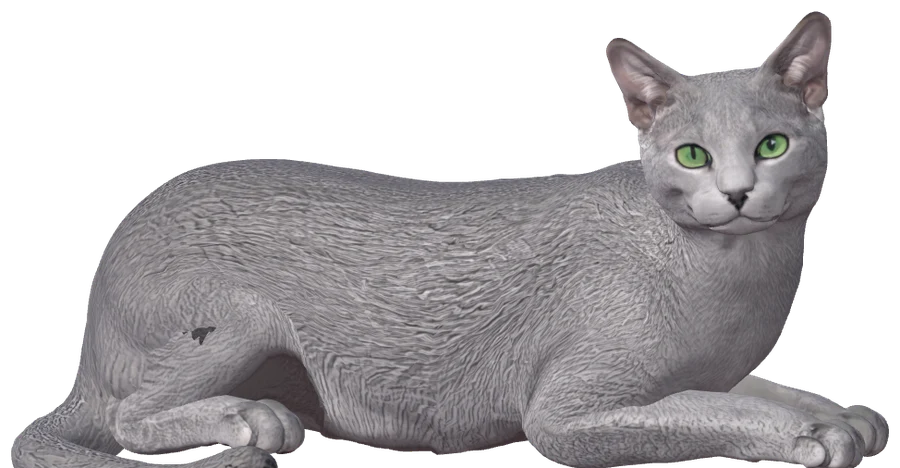
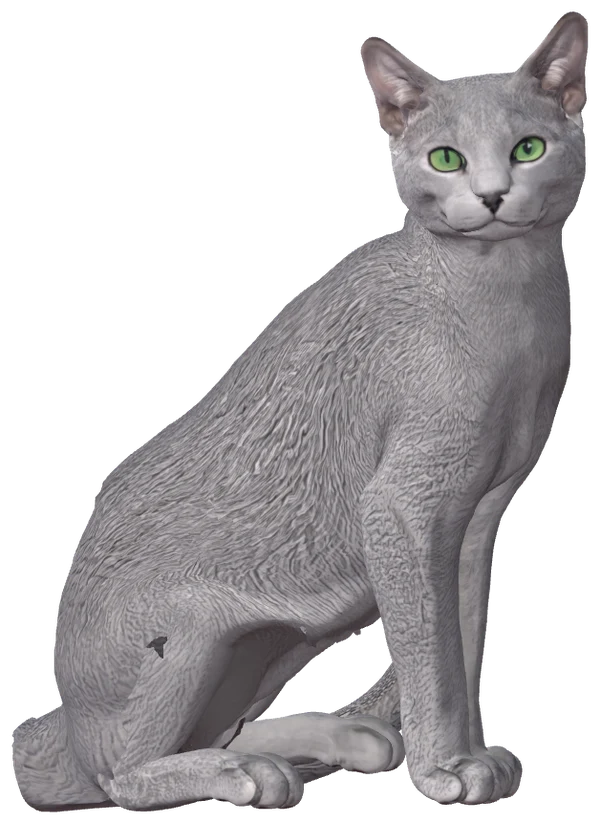
The luxuriously dense, plush coat is usually what catches your eye first. The CFA standard describes it as short, dense, fine and plush, a double coat that stands out from the body because of its density. The guard hairs are distinctly silver-tipped, giving the cat a lustrous silvery sheen; VCA says the coat feels like silk. The eyes go from golden in youth to a brilliant green in adulthood, and the green usually deepens with age. Russian Blues are easily mistaken for British Shorthairs, Chartreux or Korats.
Activity and play
Clever cats need things to think about. The CFA recommends puzzle toys and interactive games to keep their minds busy, and PetMD says opportunities to climb and perch are a must for these keen observers. Once a Russian Blue engages with you it can be very playful, even fetching tossed toys 15 or 20 times in a row. VCA notes they can entertain themselves with toys when you are not around.
Grooming and care
Grooming is easy. The CFA suggests combing two or three times a month to keep shedding under control, and otherwise just keeping the claws trimmed and the eyes and ears clean. PetMD recommends routine dental cleanings by your vet and a food suited to your cat's life stage. Russian Blues have large appetites, so measured meals rather than free-choice feeding help keep them trim.
Health and lifespan
Sources disagree on lifespan: VCA gives 12 to 15 years, while PetMD gives a long 15 to 20 years and calls the breed generally healthy. The main thing to watch is weight: the CFA warns that Russians have large appetites and, without frequent interactive exercise, are at risk of obesity, which PetMD links to diabetes, heart disease and other problems. PetMD adds that polycystic kidney disease and progressive retinal atrophy can affect the breed, and that reputable breeders should screen for them. Keep up regular check-ups and ask your vet about diet and weight.
Living with one
Russian Blues are best suited to quieter homes, although many settle into busier households and make friends with other animals. VCA says they adapt nicely to being home alone while you are at work. The CFA says they are good pets for older children who let the cat take its time, and PetMD agrees they get along with other pets and with children who play gently. In a boisterous home, make sure your Russian Blue has a peaceful space of its own. They are well suited to indoor life with plenty of climbing spots.
Fun facts
The Russian Blue has several nicknames, including 'Maltese', 'Archangel Blue', 'Spanish Blue' and 'Foreign Blue'. VCA calls it one of the oldest natural cat breeds in existence. Each hair looks as if it has been dipped in silver.
About the Russian Blue
At a glance.
- Origin
- Russia (believed to be the Archangel Isles)
- Group
- Shorthair (CFA)
- Weight
- 3.2–5.4 kg
- Lifespan
- 12-20 (sources disagree: 12-15 and 15-20) years
- Coat
- Short, dense, plush, silver-tipped double coat
- Colours
- Blue
11
Questions about
the Russian Blue.
Are Russian Blue cats friendly?
Yes, with their own people. They are gentle and affectionate but often shy with strangers at first.
Why do Russian Blues look silver?
The guard hairs of the blue-grey coat are tipped with silver, which gives the coat a shimmering sheen.
Can a Russian Blue be left alone during the day?
VCA says the breed adapts nicely to being home alone while you are at work, especially with toys to keep it busy.
How long do Russian Blues live?
VCA gives 12 to 15 years and PetMD gives 15 to 20 years.
Are Russian Blues good with children?
They do best with older or gentle children who let the cat take its time getting comfortable.
12 · Sources
cfa.org/breeds/russian-bluevcahospitals.com/know-your-pet/cat-breeds/russian-bluepetmd.com/cat/breeds/russian-blue