
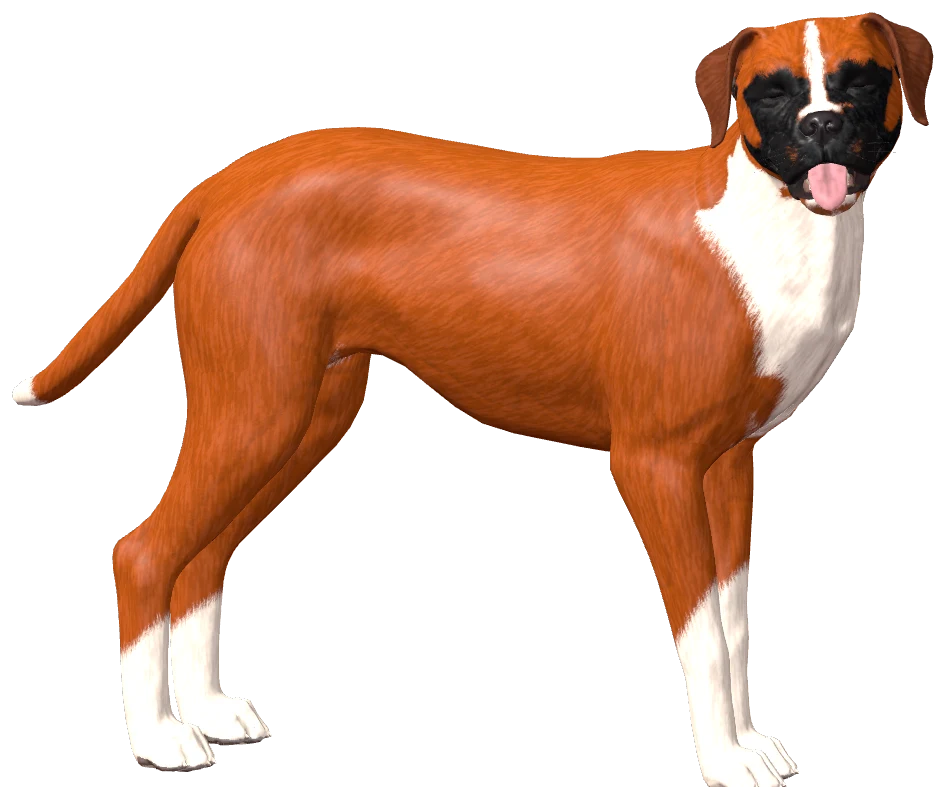
The American Kennel Club sums Boxers up as loyal, affectionate, intelligent, hard-working and good looking: bright and alert, sometimes silly, but always courageous.
At a glance
A large, muscular dog with a short muzzle and a short, shiny coat in fawn or brindle, often with white. Boxers stand around 53 to 64 cm and usually live about 8 to 12 years. They are loyal, playful and good with children given the right training, and they need at least two hours of exercise a day. Sillmates makes the Boxer as a desktop pet companion for Mac and Windows, in Fawn and Brindle coats.
History and origin
The Boxer descends from the German Bullenbeisser, meaning bull biter, a breed used to hunt bear, boar and deer in the 19th century. In the early 1800s German hunters tried to improve their hunting dogs by crossing their Bullenbeissers with mastiff-type dogs and with Bulldogs, and the Bulldog cross is thought to be the basis of the modern Boxer. The breed was established by 1895. The Boxer was one of the first breeds used as a police and military dog: it proved its worth as a tracking dog and worked in the armed forces as a messenger and pack carrier. Today it is much loved as a family companion and is an excellent guard dog.
Temperament and personality
The American Kennel Club sums Boxers up as loyal, affectionate, intelligent, hard-working and good looking: bright and alert, sometimes silly, but always courageous. They are known for their kind and clownish natures, which have made them popular family pets, and they love spending time with their owners. They are fairly outgoing toward strangers and generally good with other dogs, though some can be aggressive toward strange dogs. Boxers mature a lot slower than other breeds and keep their puppy attitude longer than most, so you may find yours rarely has a calm moment at home. They do best with a firm owner who combines reward-based training with good control and leadership.
Size and build
The Boxer is a large dog with a clean outline and a noble head. The American Kennel Club gives 23 to 25 inches for males and 21.5 to 23.5 inches for females, with males at 65 to 80 pounds and females about 15 pounds lighter. The PDSA gives an average height of 53 to 63 cm and an average weight of 25 to 27 kg for females and 30 to 32 kg for males. The short muzzle gives the Boxer a flat face, which affects how well it copes with heat and breathing.
Coat and colours
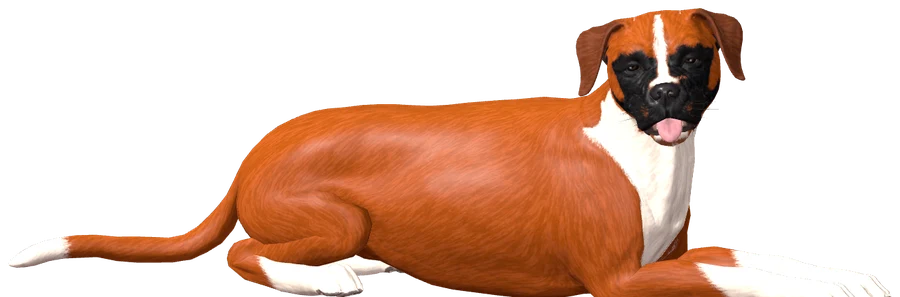
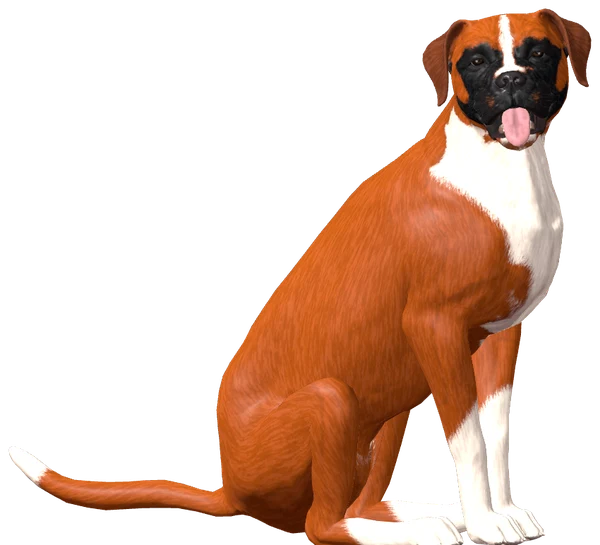
The coat is short, glossy and shiny. The Royal Kennel Club breed standard colours are shades of fawn, red and brindle, including fawn, fawn and white, red, brindle, brindle and white, dark brindle, light brindle and golden brindle with white.
Exercise and play
Boxers need a minimum of two hours of exercise every day, and The Royal Kennel Club puts it at more than two hours. A long walk, a jog or energetic games all count, plus lots of playtime and free time in a large, secure garden to blow off steam. A Boxer makes a calm and alert housedog, but can be restless without enough exercise. Obedience training matters both for control and for the mental exercise it gives. Take care in warm weather: the Boxer's short muzzle makes it intolerant of heat.
Grooming and care
Boxers are fairly low maintenance to groom. Their short fur only needs a weekly brush, and shedding is average, happening through the year and more in spring and autumn. The skin folds around the face need attention: keep them clean and dry so they do not become infected, because Boxers are at risk of skin fold dermatitis. Boxers love human company and can develop separation anxiety if left alone; a bored or lonely Boxer likes to chew, which puts furniture and belongings at risk. They are not big barkers, but may become more vocal if bored or left alone.
Health and lifespan
Lifespan figures differ between sources: the American Kennel Club gives 10 to 12 years, VCA Hospitals 8 to 10 years, and the PDSA and The Royal Kennel Club say over 10 years. Conditions the PDSA lists for Boxers include brachycephalic obstructive airway syndrome (BOAS), which can cause breathing problems in Boxers with shorter faces, heart problems such as cardiomyopathy or aortic stenosis, skin problems such as skin allergies and skin fold dermatitis, and certain cancers. The Royal Kennel Club recommends hip, elbow and eye testing for breeders. Choose a puppy whose parents have had the relevant health screening, keep your Boxer cool and lean, and see your vet about any breathing difficulty, tiredness or new lump.
Living with one
Generally, Boxers are good around children of all ages given the right training, and VCA Hospitals describes them as playful and gentle with children. Because of their size and boisterous nature, though, the PDSA does not recommend one for families with younger children, who could be knocked over by accident; always supervise dogs with children. A Boxer may get along with a cat it has grown up with, but should always be supervised with smaller pets. The Royal Kennel Club suggests a large house with a large garden, so this is not a natural flat dog.
Fun facts
The Boxer's ancestor, the Bullenbeisser, takes its name from the German for bull biter. Boxers were among the first dogs used by police and the military, and carried messages and packs for the armed forces. And thanks to their slow maturing, many Boxers keep their puppy attitude well into adulthood.
About the Boxer
At a glance.
- Origin
- Germany
- Group
- Working (Royal Kennel Club and AKC)
- Height
- 53–64 cm
- Weight
- 23-36 (sources differ: 25-32 and about 23-36) kg
- Lifespan
- 8-12 (sources disagree: 10-12 and 8-10) years
- Coat
- Short, glossy and shiny
- Colours
- Fawn, Fawn and white, Red, Brindle, Brindle and white, Dark brindle, Light brindle
11
Questions about
the Boxer.
Are Boxers good family dogs?
Yes, with the right training. They are known for kind, clownish natures and are generally good with children, though their size and bounce make them better with older children.
How much exercise does a Boxer need?
At least two hours a day, plus playtime in a secure garden. Take care in hot weather, as the short muzzle makes them intolerant of heat.
How long do Boxers live?
Sources differ: the American Kennel Club gives 10 to 12 years and VCA Hospitals 8 to 10 years. The PDSA and The Royal Kennel Club say over 10 years.
What colours do Boxers come in?
Fawn, red and brindle, with or without white, are breed standard colours in the UK, including light, dark and golden brindle.
Why were Boxers bred?
They descend from the German Bullenbeisser, a hunting dog, and became one of the first police and military dogs, working as trackers, messengers and pack carriers.
12 · Sources
royalkennelclub.com/search/breeds-a-to-z/breeds/working/boxervcahospitals.com/know-your-pet/dog-breeds/boxerakc.org/dog-breeds/boxerpdsa.org.uk/pet-help-and-advice/looking-after-your-pet/puppies-dogs/large-dogs/boxer